Imagine wrapping up a long workday in Block A, C or D of Paryavaran Complex, stepping out of your society gate, hopping into an auto, and just 12–15 minutes later, you’re walking into a narrow, magical lane glowing with fairy lights. The air is filled with the aroma of fresh coffee, artisanal food, and faint live music playing in the background. This is not some far-off destination in South Delhi — this is your regular evening at Champa Gali.
For residents of Paryavaran Complex, having Champa Gali so close is more than just a convenience — it’s a significant lifestyle upgrade. While people pay premium rents to live in Saket or near Select Citywalk just to be close to good cafés and vibrant spaces, Paryavaran Complex residents enjoy almost the same experience at a much more affordable rental cost.
Champa Gali transforms ordinary weekdays and weekends into rich, fulfilling experiences — whether it’s a quick solo coffee after work, a romantic evening with your partner, or a relaxed Sunday brunch with friends. It brings creativity, culture, and community right to your doorstep without the heavy price tag of central South Delhi living.
What Is Champa Gali?
Champa Gali is a boutique café and creative lane in Saidulajab, South Delhi. The name translates loosely to “fragrant alley,” and the description is fitting — not in a perfume-advertisement way, but in the sense that the whole place carries a distinct, unhurried character that is hard to find elsewhere in this part of the city.
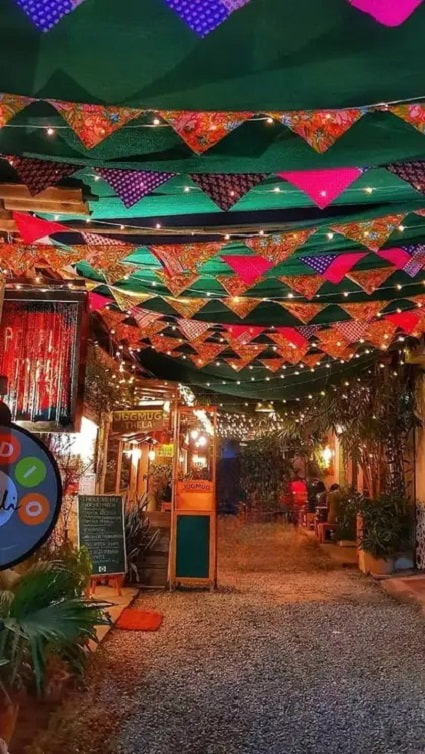
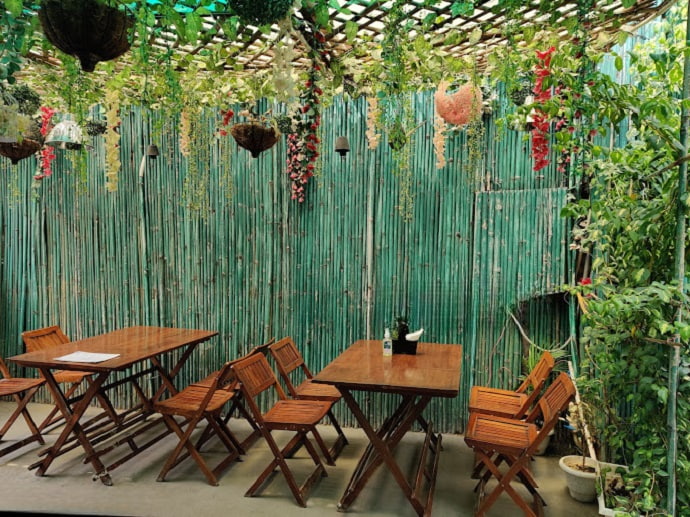
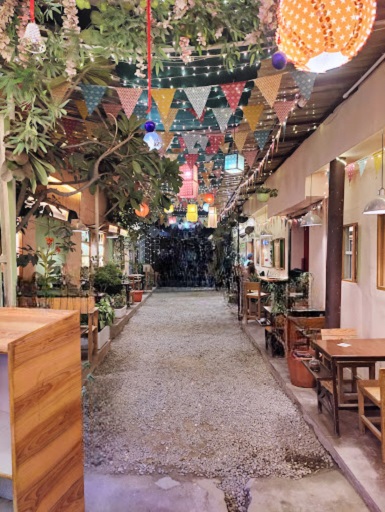
The lane is lined with independent cafés, small studios, and artistic installations. There are fairy lights strung between the walls. There are murals that change over time. There are outdoor seating areas where people settle in for hours and nobody asks them to move. It is, by any definition, a creative enclave — the kind of space that grows organically in cities when artists, café owners, and like-minded people find an affordable pocket before rents catch up with the reputation.
Why Champa Gali Became Popular in South Delhi?
Champa Gali did not become famous because of a press release. It spread through photographs shared on social media — the fairy lights, the murals, the perfectly framed cups of coffee — and then it earned something more durable than viral attention: word of mouth from repeat visitors.
South Delhi had long had a café culture anchored in Select Citywalk, Khan Market, and similar high-footfall destinations. Champa Gali offered something different: independent café owners who actually cared about the beans they roasted, the music they played, and the atmosphere they built. It attracted a crowd that valued that difference, and it held them. People come back not because it is new, but because it is consistently good.
Where Is Champa Gali located, and how do you get there from the Paryavaran Complex?
Champa Gali is located in Lane 3, Swetend Marg, Saidulajab Village, just a stone’s throw away from Saket Metro Station Gate No. 2. Tucked inside a narrow, winding alley in the urban village of Saidulajab, it has managed to retain its old-world charm while becoming one of South Delhi’s most loved café destinations.
Distance & Accessibility from Paryavaran Complex
One of the biggest advantages for residents of Paryavaran Complex is how conveniently close Champa Gali actually is:
| Block | Distance | By Auto / E-Rickshaw | Approx. Fare | Walking + Metro |
|---|---|---|---|---|
| Block C, D & E | 1.8 – 2.2 km | 10–15 minutes | ₹30–50 | Very Convenient |
| Block A & B | 2.3 – 2.7 km | 12–18 minutes | ₹40–60 | Good |
| Block J | 2.8 – 3.2 km | 15–20 minutes | ₹50–70 | Moderate |
For residents coming from Paryavaran Complex, the most common routes are:
- By auto: Autos are consistently available along IGNOU Road and the Saidulajab stretch. The journey takes roughly 8–12 minutes depending on the time of day, and fares are reasonable for a short local hop.
- By metro: Saket Metro Station on the Yellow Line is the natural anchor. From there, Champa Gali is either a short auto ride or a manageable walk through Saidulajab. This is often the easiest option on weekend evenings when cab availability gets erratic.
- By cab or bike: Evening cab availability is generally fine on weekdays. Weekend nights near Saket see surge pricing, so the metro option becomes genuinely attractive.
- Walking: Parts of the route are walkable if you enjoy an evening stroll through residential lanes — though the full distance from deeper parts of Paryavaran Complex makes this practical only for those closest to the Saidulajab boundary.
- Neb Sarai & Freedom Fighter Enclave: Slightly farther (3–4 km). Takes 20–25 minutes, making it less spontaneous.
- IGNOU Road: Around 3.5–4 km. Usually requires a longer auto ride.
The connectivity advantage here is real. Residents in Freedom Fighter Enclave, Neb Sarai, and IGNOU Road areas are similarly well-placed, but for Paryavaran Complex specifically, Champa Gali is among the closest creative lifestyle destinations available — no long commute, no expressway traffic, no planning an entire afternoon around getting there and back.
Late Evening Return Options
Most residents we spoke to confirmed that returning from Champa Gali is quite safe and convenient till 10:30–11:00 PM:
- E-rickshaws and autos are easily available near Saket Metro Gate 2 till around 11 PM.
- After 11 PM, it’s advisable to book a cab (Ola/Uber) as e-rickshaws become less frequent.
- Many residents prefer going in small groups on weekends for added comfort.
Pro Tip from Locals: If you live in Block C or D, you can often reach home in under 12 minutes even at 10 PM — something very few societies near Saket or Malviya Nagar can offer.
The Atmosphere That Makes Champa Gali Different
This section matters more than the map coordinates, because what Champa Gali actually sells is an experience — and that experience is genuinely distinct from what you find at most destinations in South Delhi.
What You See
The lane is narrow and low-rise, which immediately changes your perception of space. There are no glass towers, no branded frontages, no glowing signage competing for your attention. Instead: hand-painted murals on textured walls, string lights that feel considered rather than commercial, café entrances that invite curiosity, and artistic corners — a painted bicycle here, a hanging plant installation there — that reward a slow walk.
What You Hear
Café music drifts from open doorways. People talk at a normal volume, not the raised-voice register of a busy restaurant. On evenings when open mic events or acoustic performances are happening, there is a warm background hum of music that does not demand your attention but makes everything feel a little more alive.
What You Smell and Feel
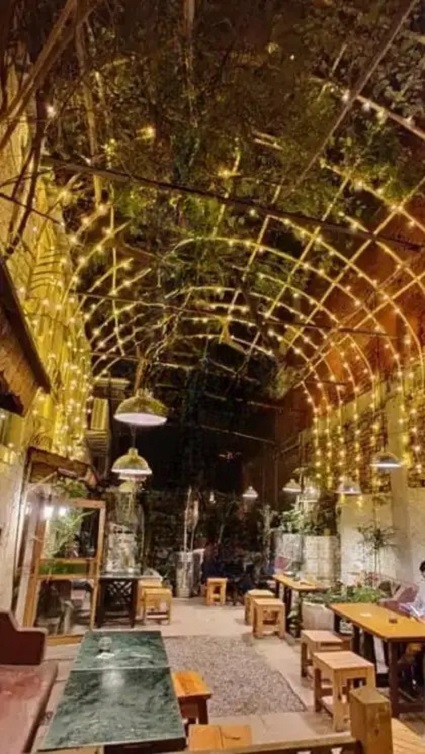
The aroma of freshly roasted coffee is constant in the better parts of the lane. There is fresh bread or baking from at least one café most days. The outdoor seating areas carry a breeze in winter that makes the whole experience feel intentional — like someone designed this specifically for the months between October and February when Delhi’s weather finally becomes something to enjoy.
Most importantly: the pace. Champa Gali operates on a slower frequency than most of Delhi. Nobody is rushing. Nobody is optimising for throughput. It is the rare urban space that feels genuinely unhurried, and that is not accidental — it is the result of the kind of crowd it attracts and the kind of businesses that have chosen to operate here.
The Best Cafes in Champa Gali
The cafés are the centrepiece, and they deserve proper attention rather than a vague list. What distinguishes the café scene in Champa Gali from standard coffee shop culture is that most of the operators here actually started from a point of genuine interest in coffee, food, and hospitality — not franchise playbooks.
Blue Tokai Coffee Roasters
Blue Tokai is arguably the café that put Champa Gali on the map for serious coffee drinkers in Delhi. Their approach is single-origin, filter-forward, and educational without being intimidating. The Champa Gali outpost has the ambiance that suits the lane — understated, focused, comfortable. If you are a working professional who wants to spend three hours with a laptop and a decent flat white, this is one of the best places in South Delhi to do that. The seating is designed for comfort and the WiFi is functional. The crowd tends toward young professionals, creators, and students — quiet and purposeful, not chaotic.
Jugmug Thela
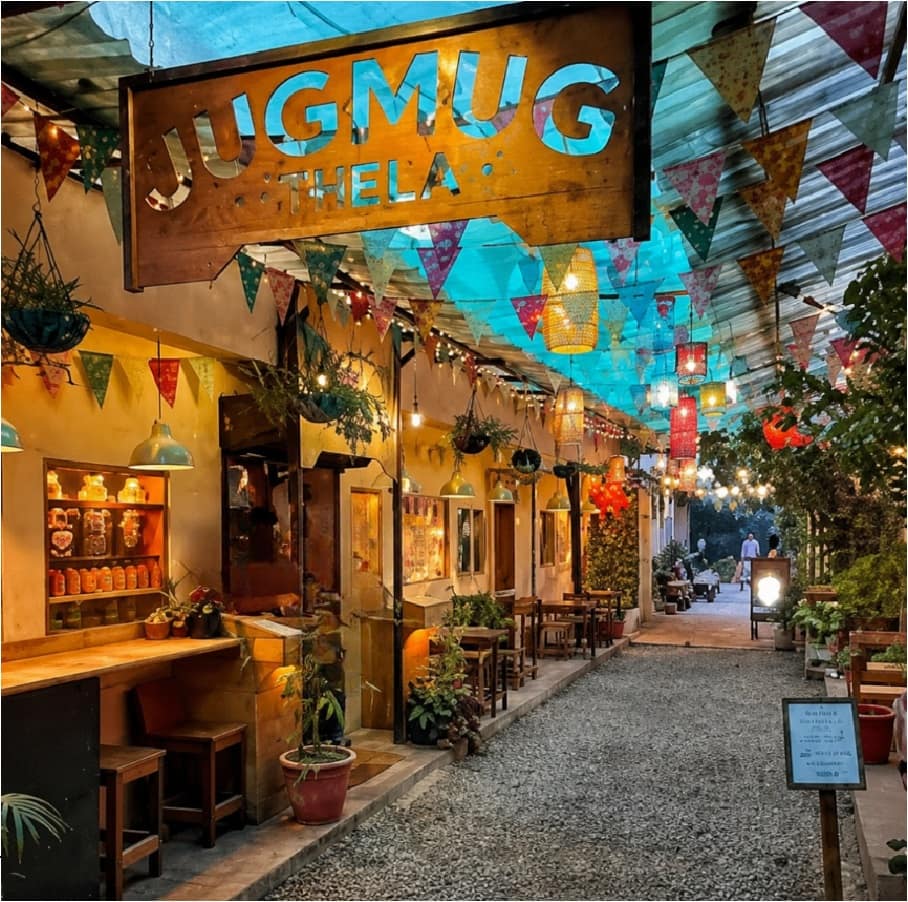
Jugmug Thela is the personality of Champa Gali in café form. It is quirky, warm, and unabashedly Indian in its sensibility — chai, regional snacks, and an atmosphere that feels more like someone’s thoughtfully decorated home than a commercial establishment. It tends to attract couples, creative types, and people who find the clinical precision of specialty coffee culture slightly exhausting. The crowd is friendly, the space is intimate, and it is the kind of place where conversations happen easily.
Other Cafés and Rotating Spaces
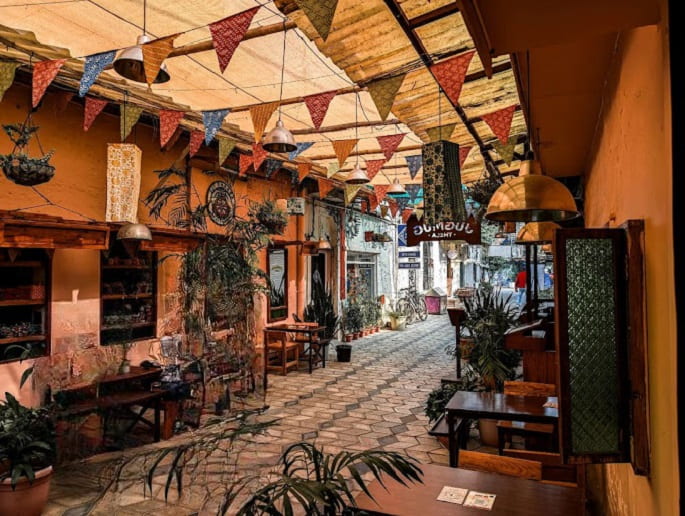
Champa Gali has a small but evolving collection of additional café spaces — some focused on seating and work, others on food, and a few that shift seasonally. Part of the appeal is that the lane does not feel frozen. There is always something slightly new to explore, which is precisely why residents near Paryavaran Complex tend to return regularly rather than treating it as a one-time visit.
For residents who want a broader picture of the café and food scene closest to Paryavaran Complex, that dedicated guide is worth reading alongside this article — it covers options that are even closer to home for those days when Champa Gali feels a little far.
Things to Do in Champa Gali (That Go Beyond Just Having Coffee)
Most people discover Champa Gali through its cafés, but the lane offers more modes of engagement than simply ordering a drink and sitting down. Here is what actually happens there:
Café Hopping
With multiple distinct cafés within walking distance of each other, moving between them in a single visit is easy and enjoyable. Each has a different character — order something at one, move to another for dessert, find a third spot for a post-dinner drink. It is a low-effort way to spend an entire evening.
Photography Walks
The lane is extraordinarily photogenic, and not just for social media purposes. The murals, the lighting, the texture of the walls, and the interplay of people and space create genuinely interesting compositional opportunities for anyone with a phone or camera. Weekend evenings in particular offer the best light-to-crowd ratio — busy enough to feel alive, not so packed that movement becomes difficult.
Open Mic Events and Live Music
Several of the cafés host open mic nights and small acoustic performances on a rotating schedule. These are informal, low-stakes events that attract a genuinely local crowd. If you follow any of the Champa Gali café pages on social media, you will get advance notice of these evenings — they are worth planning around.
Working Remotely
For residents who work from home or have flexible schedules, Champa Gali functions as a dependable remote working destination. The ambiance makes sustained concentration easier than most conventional office environments, and the quality of coffee means you are not compromising on the fundamentals. Weekday mornings are the sweet spot — fewer people, quicker service, calmer energy.
Reading and Journaling
This is underrated. The outdoor seating at several Champa Gali cafés, particularly during winter and post-monsoon months, is ideal for reading — the kind of reading that actually goes somewhere rather than the distracted kind you do on a phone. Bring a book, order something warm, and stay as long as you like.
Couple Outings and Casual Meetups
The lane has an inherently relaxed atmosphere that makes it work equally well for a quiet date and a catchup with an old friend. There is no noise floor to compete with, no sense of being rushed through a table, and no awkward formality. It is the kind of place where the conversation is the point.
Evening Walks
Especially during winter, walking the lane itself — without any particular destination — is genuinely pleasant. The lights, the cooler air, the ambient sound of music from nearby cafés: it functions as a neighbourhood stroll that happens to be more interesting than most.
What You Should Know Before You Go? (Practical Realities)
Most articles about Champa Gali are written by people who visited once on a pleasant weekday afternoon and decided it was perfect. It is very good — but it is also a real place with real limitations that are worth knowing before you plan your visit.
Parking: The Honest Situation
Parking is limited. This is not a caveat — it is the defining practical constraint of Champa Gali. The lane itself does not accommodate vehicles, and the surrounding Saidulajab streets have limited space that fills up quickly on weekends. If you are driving, plan to park further away and walk the last stretch. On weekend evenings, this can add 15–20 minutes to your arrival. The metro is genuinely the better option for most visits.
Crowd Timing
Weekend evenings from 6 PM onward see the highest footfall. The lane gets genuinely busy — not unpleasant, but narrow enough that movement slows and popular cafés may have waiting times of 20–30 minutes for a good seat. If you prefer a quieter experience, weekday evenings and weekend mornings are substantially calmer. The sweet spot for most people living in Paryavaran Complex is a Tuesday or Wednesday evening when the lane is alive but not overwhelming.
Space Constraints
The narrow lane character is part of the charm, but it also means that if you are visiting in a large group, coordinating seating across a single café can be challenging. Splitting the group between two adjacent spaces and meeting in the lane is a common and workable solution.
Metro vs. Car
Worth repeating clearly: metro is easier. Saket Metro Station (Gate No. 2) is the reference point, and from there you are a short auto ride away from the lane. On weekend evenings when cab surge pricing is active and parking near Saket is a full contact sport, metro plus auto is both faster and more economical.
Saket Evening Traffic
The broader Saket area sees significant traffic build-up on Friday and Saturday evenings — particularly around the Select Citywalk perimeter. If you are going by road, timing matters. Leaving Paryavaran Complex before 6 PM or after 9 PM on weekends helps avoid the worst of it.
Best Time to Visit Champa Gali
Winter (October to February) — Peak Season
This is unambiguously the best time. The outdoor seating transforms into the main event — fairy lights above, cool air around you, warm coffee in hand. The lane looks its most photogenic. Café energy is at its highest. If you are going to put Champa Gali on your calendar once, do it between November and January.
Summer (March to June)
Summer daytime visits are not recommended — the heat makes outdoor seating genuinely uncomfortable. However, post-sunset (after 7:30–8 PM) the temperature drops enough to make a visit worthwhile. The cafés themselves are air-conditioned, so the experience is still good; you just lose the outdoor element that makes the lane special.
Monsoon (July to September)
Monsoon gives Champa Gali a moody, atmospheric quality that some people find its most beautiful. The wet stone, the reflections of string lights, the sound of rain against café windows — it is genuinely cinematic. Practically, the narrow lane can get slippery and puddle-prone, so appropriate footwear is less optional than it sounds. Pick a dry evening, not mid-shower.
Timing Within the Day
For photography, the golden hour before sunset is the best window. For pure café enjoyment, the mid-morning slot (10 AM–12 PM) on weekdays is quietly excellent. For atmosphere and energy, Friday and Saturday evenings between 7 PM and 9 PM are the most vibrant — just expect the crowds that come with that.
Why Champa Gali Specifically Matters If You Live Near Paryavaran Complex?
This section is the reason this article exists: not to describe Champa Gali in the abstract, but to explain why its proximity to Paryavaran Complex is a genuine, tangible lifestyle advantage.
Renters Now Prioritise Lived Experience, Not Just Rent
The calculation people make when choosing where to rent in South Delhi has shifted. Affordability still matters — it will always matter — but a growing share of working professionals and young renters are asking a second set of questions: What do weekends actually look like here? Where do I unwind after work? Is there somewhere I can go that is not a mall?
Paryavaran Complex answers those questions well. The green spaces and parks surrounding the area handle the nature side of the equation. Champa Gali handles the social and creative side. These two things together — walkable nature and accessible culture — represent the kind of lifestyle combination that residents in most parts of Delhi have to compromise on.
Why Young Renters Choose Areas Near Saket
Saket Metro connectivity is a primary driver. But connectivity alone does not fully explain the preference — plenty of metro-adjacent localities in Delhi fail to become desirable. What Saket and its surrounding neighbourhoods offer is a combination of infrastructure (the metro, Select Citywalk, good road access) and culture (Champa Gali, the café scene, the Garden of Five Senses, the proximity to Mehrauli’s quieter streets).
Living in Paryavaran Complex puts you inside that ecosystem. The infrastructure and the culture are both accessible without a long commute to reach either. That is not something most rental addresses in Delhi can honestly claim.
Work-Life Balance for Remote Workers and Professionals
If you work remotely — even part of the time — your residential neighbourhood becomes part of your working environment. The ability to walk or take a short auto to a quiet café, work for a few hours in an atmosphere that is genuinely conducive to concentration, and return home without the overhead of a long commute is a concrete quality-of-life advantage.
Working professionals renting in Paryavaran Complex have noted this specifically — the area gives you a meaningful break from the home environment without demanding half a day to achieve it.
Less Travel for Leisure Means More Actual Leisure
This sounds simple but compounds over time. If every weekend outing requires 45 minutes of commuting each way, you gradually stop going. The options that are 10–15 minutes away get used; the others accumulate on a mental list of places you keep meaning to visit. Champa Gali’s proximity to Paryavaran Complex means it lands in the “will actually go” category rather than the “would be nice to visit someday” category.
Nearby Places to Explore Alongside Champa Gali
Most residents who go to Champa Gali combine it with at least one other destination. The area’s geography supports this naturally. A typical half-day itinerary from Paryavaran Complex might look something like this:
- Morning: A walk through the Garden of Five Senses, which is directly opposite Paryavaran Complex on IGNOU Road — one of South Delhi’s most underrated parks and a genuinely beautiful space in the cooler months.
- Afternoon: Head to Champa Gali for lunch and a long café session. Photography, work, or just time spent in the lane.
- Evening: Move toward Select Citywalk for dinner if you want variety, or return to Saidulajab street food for something more local and considerably more affordable.
The Mehrauli café and heritage cluster is another natural pairing — a short distance from Champa Gali and worth combining on days when you want to go deeper into South Delhi’s less-commercial character. The Qutub Minar area, with its broader heritage context, rounds out an afternoon that mixes culture, food, and architecture.
Is Living Near Champa Gali Worth It? An Honest Review
For people considering whether proximity to Champa Gali is a meaningful advantage when choosing a rental in Paryavaran Complex, here is a balanced view:
The Genuine Advantages
- A high-quality, non-commercial lifestyle destination within 10–15 minutes of home.
- Excellent remote-working infrastructure in the form of cafés that actually support sustained work.
- An alternative to malls and chain food for weekends and evenings.
- A social destination that works for couples, solo visitors, groups, and professional meetups equally well.
- Close alignment with the broader Saket lifestyle ecosystem.
The Practical Considerations
- Weekend crowds are real — plan timing accordingly.
- Parking near Champa Gali is genuinely constrained; driving is less practical than metro plus auto.
- The lane’s narrowness means large groups require some logistical flexibility.
- Saket area traffic on Friday and Saturday evenings requires either early departure or patience.
On balance: yes. For the kind of resident Paryavaran Complex tends to attract — working professionals, students, couples, and people who value a thoughtful neighbourhood over a flashy one — Champa Gali’s proximity is a meaningful and regularly usable lifestyle advantage. It is not a feature that sounds good on paper and disappears in practice. People who live near it go back, consistently, because the experience is genuinely good.
Frequently Asked Questions
What is Champa Gali famous for?
Champa Gali is known for its independent café culture, artistic atmosphere, murals, fairy lights, and the overall creative character of the lane. It is particularly well-regarded for specialty coffee, remote working-friendly spaces, and a slower, more thoughtful pace than most South Delhi commercial destinations.
Is Champa Gali near Saket Metro?
Yes. Champa Gali in Saidulajab is accessible from Saket Metro Station (Yellow Line, Gate No. 2) via a short auto ride. For most people coming from Paryavaran Complex, metro plus auto is the easiest and most reliable way to reach it.
Which are the best cafes in Champa Gali?
Blue Tokai Coffee Roasters and Jugmug Thela are the two most consistently well-regarded establishments. Blue Tokai suits those who want specialty coffee and a work-friendly environment; Jugmug Thela is better for a more relaxed, characterful, India-flavoured experience. The lane also has additional cafés worth exploring on repeat visits.
Is Champa Gali good for couples?
Very much so. The lane’s intimate scale, relaxed atmosphere, outdoor seating, and ambient music make it a naturally good setting for a date or a quiet evening together. Weekday evenings offer a more private experience than busy weekend nights.
What is the best time to visit Champa Gali?
Winter evenings (October to February) are the best time — the outdoor seating, the fairy lights, and the cool air combine to create the most enjoyable atmosphere. Weekday evenings are calmer than weekends. For photography, the window around sunset is particularly good.
Is parking available in Champa Gali?
Parking is limited and can be difficult, especially on weekends. The lane itself does not accommodate vehicles, and nearby street parking fills up quickly. The metro is a genuinely better option for most visits from Paryavaran Complex.
How far is Champa Gali from Paryavaran Complex?
The distance is approximately 1.5–2.5 km depending on your specific location within Paryavaran Complex, making it a 8–15 minute auto or cab ride under normal traffic conditions. Weekend evening traffic near Saket can extend this slightly.
Can people work remotely from cafés in Champa Gali?
Yes — Blue Tokai in particular is well-suited to remote working, with comfortable seating, reliable WiFi, and an atmosphere that supports sustained concentration. Weekday mornings are the best slot for this: fewer people, quicker service, quieter overall.
Why do renters like living near Saket?
The Saket area offers a combination of metro connectivity, retail and dining variety through Select Citywalk, and proximity to creative destinations like Champa Gali and the Garden of Five Senses. For renters who value both practical infrastructure and lifestyle quality, it represents one of South Delhi’s best-rounded choices. Paryavaran Complex sits inside this ecosystem at relatively affordable rental rates compared to addresses closer to the metro station itself.
Are there other places to visit near Champa Gali?
Several. The Garden of Five Senses is directly accessible from Paryavaran Complex and pairs naturally with a Champa Gali visit. Select Citywalk and its dining options are nearby. The Mehrauli heritage cluster and Qutub Minar area are a short extension if you want to spend a full day exploring South Delhi. The local café and food scene around Paryavaran Complex also offers good options for days when you want to stay closer to home.
Looking for a flat in Paryavaran Complex that puts you close to all of this? Browse current listings on Apna Paryavaran — South Delhi’s most focused rental platform for this neighbourhood.
Comments