Imagine stepping out of your rented flat on a Thursday evening after a particularly draining workday — the kind where every Zoom call felt longer than it needed to be and the Delhi traffic on your commute home tested your patience one more time. Now imagine that within ten minutes, you are walking through a space where the only sounds are ceramic chimes tinkling in the breeze, water trickling over sculpted stone, and the rustle of bamboo leaves overhead. No car horns. No construction noise. Just a twenty-acre oasis designed specifically to awaken your senses and quiet your mind. For renters living in Paryavaran Complex, this is not a weekend getaway fantasy — it is a real lifestyle advantage called the Garden of Five Senses. Located just 2.4 kilometers away in Said-ul-Ajaib, this unique sensory park offers something rare in Delhi: a space that actively improves your quality of life simply by existing nearby. This is not just about having a park to visit occasionally. It is about proximity to a place that becomes part of your weekly rhythm — where you decompress after work, meet friends without sitting in a mall, take morning walks that actually feel restorative, and remind yourself that living in a crowded city does not mean sacrificing beauty and peace entirely.
Quick Facts – Garden of Five Senses
| Particulars | Details |
|---|---|
| Location | Said-ul-Ajaib, Westend Marg, Near Saket Metro Station, South Delhi |
| Useful Links | Map | Website |
| Timings | Open throughout the year |
| Best Time to Visit | 1st October – 31st March (Pleasant weather & flowers in full bloom) |
| Ideal Duration | 2–3 Hours |
| Temperature | Max 42°C |
| Entry Fee | Adult: ₹50 | Child/Senior: ₹20 |
| Phone No for Booking | 9871540353 |
| Nearest Metro | Saket Metro Station (Yellow Line), Gate 2 |
| Nearest Airport | Indira Gandhi International Airport (IGI) |
| Nearest Railway Station | New Delhi Railway Station |
Table of Contents
- What Is Garden of Five Senses?
- Why Is It Called the Garden of Five Senses?
- History, Design & Key Attractions
- Practical Visitor Guide
- Things to Do at Garden of Five Senses
- Why People Keep Coming Back Here
- Best Time to Visit
- Entry Fee, Timings & Visitor Information
- Food, Cafes & Nearby Experiences
- How Garden of Five Senses Improves Lifestyle Around Paryavaran Complex
- Nearby Places to Explore
- Is Living Near Garden of Five Senses Worth It?
- Final Thoughts
- FAQs
What Is The Garden of Five Senses?
The Garden of Five Senses is not your typical Delhi public park. It is not Lodhi Garden with joggers circling the same path every morning, or India Gate with its tourist crowds and street vendors. It is something more intentional — a designed landscape that asks you to slow down and actually pay attention to what you are experiencing. The garden sits on approximately 20 acres in Said-ul-Ajaib village, tucked between the Mehrauli heritage zone and the more residential pockets of South Delhi. Developed by the Delhi Tourism and Transportation Development Corporation and opened in February 2003, the project was conceived by landscape architect Pradeep Sachdeva as a space that serves all sections of society — students, families, couples, seniors, artists, photographers — without requiring an expensive ticket or membership.
The defining characteristic is right there in the name: this garden is built around the concept of sensory engagement. Every zone, every pathway, every installation is designed to stimulate at least one of your five senses — sight, sound, smell, touch, taste. That might sound abstract or gimmicky, but the execution is surprisingly effective. When you walk through the Trail of Fragrance lined with flowering shrubs, the scent actually shifts as you move. When you stand beneath the installation of 500 ceramic chimes, the wind creates a sound that is genuinely soothing rather than chaotic. When you run your hand along the textured sculptures or natural rock formations, the tactile experience adds a dimension that most parks ignore entirely.
What Makes the Garden of Five Senses So Different From Other Parks?
What separates the Garden of Five Senses from Delhi’s older public parks is the deliberate design thinking. This is not land that happened to have trees and got fenced off as a park. This is landscape architecture with purpose — water features positioned to create reflection and sound, art installations that invite interaction rather than observation from a distance, plant varieties chosen for fragrance and visual impact across seasons. The garden preserves existing vegetation (old Kikar and Ber trees that were already on the site) while introducing over 200 new plant species arranged in themed courts — a Bamboo Court, an Herb Garden, sections dedicated to specific flowers like geraniums and calendula.
Why Is It Called the Garden of Five Senses? The Sensory Experience Explained
The name is not marketing fluff — it is a design brief translated into physical space. The garden was conceived around the philosophy that urban spaces should engage the full range of human sensory experience, not just the visual. Most parks offer greenery and walking paths. This garden adds fragrance, texture, sound, and even taste through its food court featuring organic products. Here is how each sense gets activated:
Sight — Colour, Form, and Visual Drama
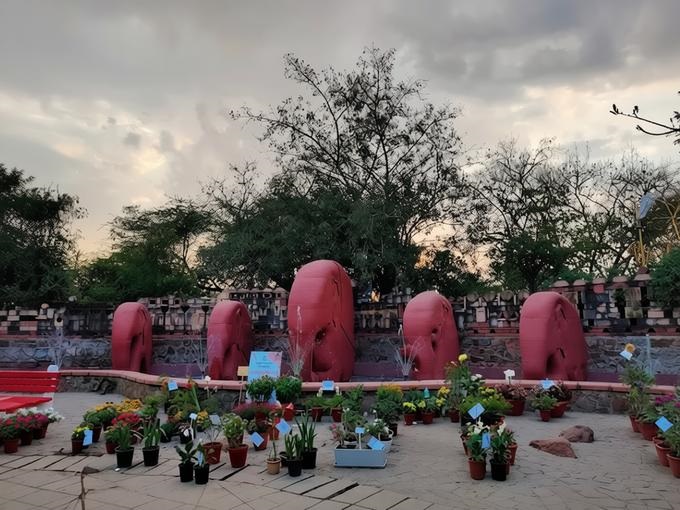
The visual layer is the most obvious. The garden uses color strategically — entire sections planted with flowers that bloom in coordinated palettes (the Colour Gardens), Mughal-inspired symmetry in the Khaas Bagh with its geometric water channels and fountains, contemporary sculpture installations (over 25 pieces) that use stone, metal, and natural materials to create forms that shift depending on the angle and light. The Neel Bagh features a large pool with water lilies and pergolas covered in climbing plants, creating a layered visual effect. Rock formations are integrated into the landscape rather than flattened, giving the terrain natural drama.
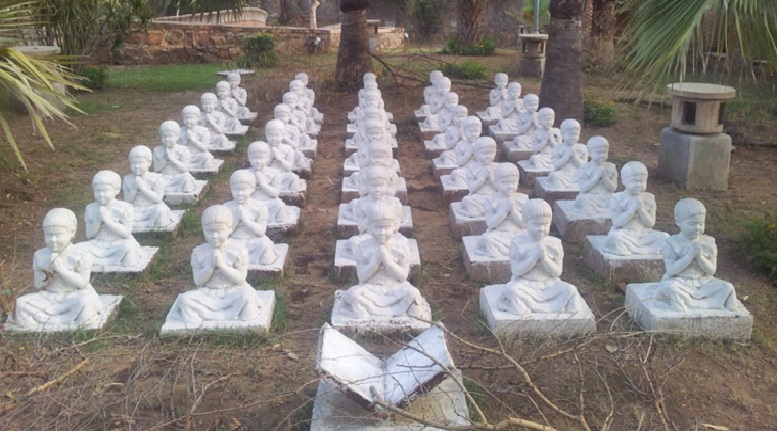
For photographers, the garden offers compositional variety that most Delhi parks lack — modern abstract sculptures against traditional Mughal design elements, water reflections, seasonal flowers, architectural details. The light changes throughout the day (golden hour here is particularly beautiful), which means the same path looks different at 7 AM versus 6 PM.
Sound — Chimes, Water, and Calculated Quiet
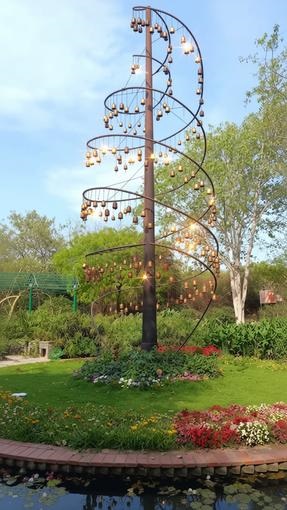
The wind chime installation is one of the garden’s signature features: 500 ceramic bells suspended from a sculptural tree structure. When the breeze moves through, the sound is layered and tonal rather than random clanging — it was designed by sound artists to create harmony. Water fountains add a consistent background sound (the kind that helps mask distant traffic noise), and in the quieter corners, you simply hear wind moving through bamboo or the rustle of leaves. The absence of loudspeakers, car horns, and construction noise becomes noticeable — you realize how rare genuine quiet is in Delhi.
This auditory layer matters more than it sounds on paper. When you are in the garden on a weekday afternoon with relatively few visitors, the soundscape actively lowers your stress response. It is the same reason people pay for meditation apps with nature sounds — except here, it is real and free after the entry ticket.


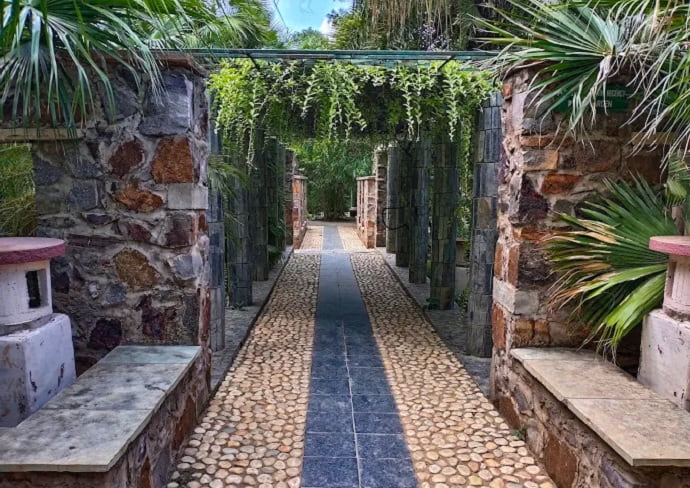
Smell — The Trail of Fragrance and Seasonal Blooms
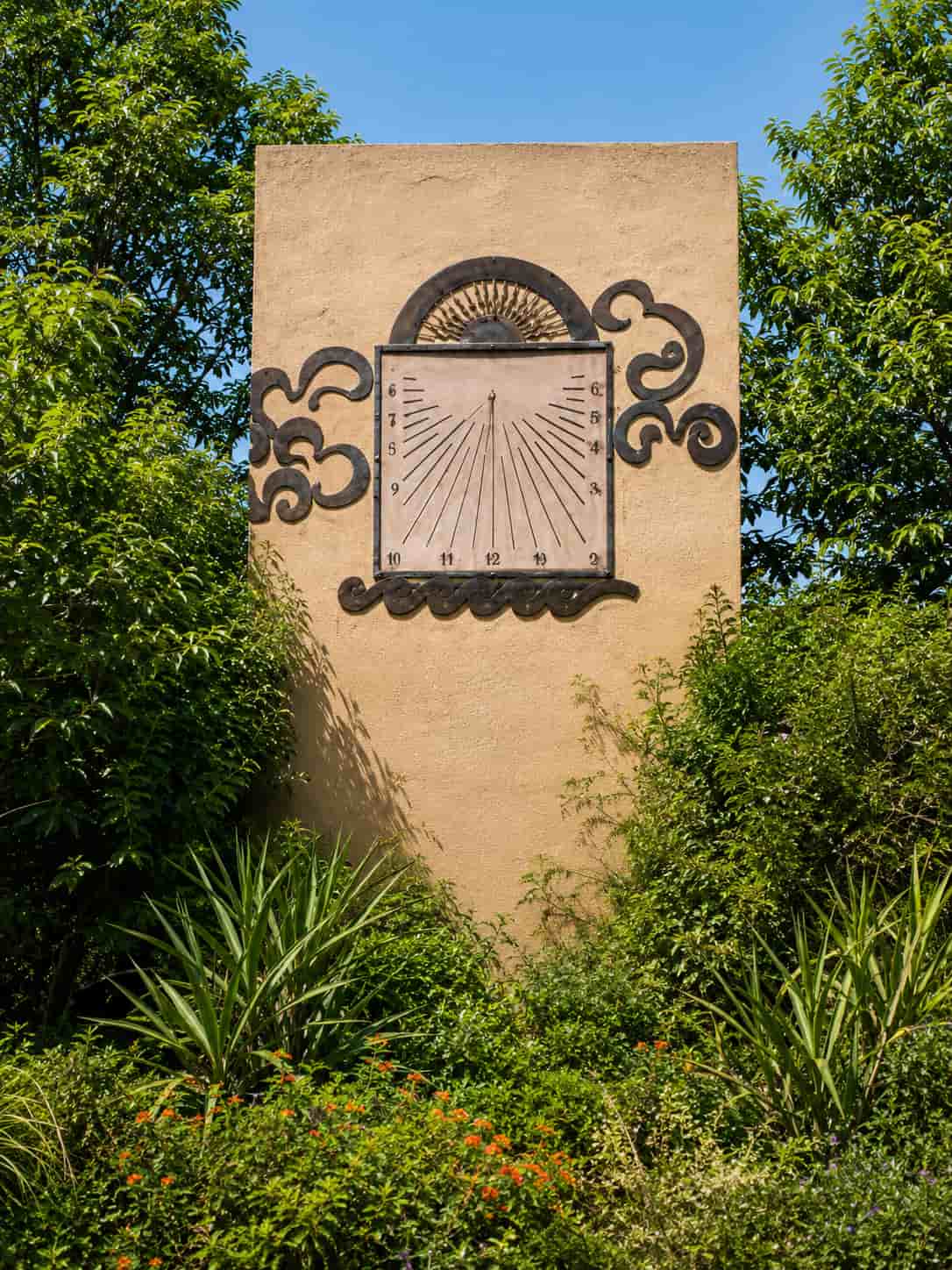
The Trail of Fragrance is a dedicated pathway lined with flowering shrubs and herbs chosen specifically for scent. As you walk, the fragrance shifts — jasmine, mogra, roses, lavender, lemongrass. During peak bloom seasons (February–March), the effect is strong enough that you notice it without trying. The Herb Garden adds culinary and medicinal plant scents (mint, basil, thyme), and even the trees contribute — Champa and Raat ki Rani release fragrance in the evenings.
Scent is the most directly emotional sense (it bypasses the thalamus and goes straight to the limbic system in the brain), which is why the fragrance layer creates such a strong sense of well-being. You leave the garden and remember how it smelled, which creates a sensory anchor for the experience.
Touch — Textures, Surfaces, and Tactile Engagement
Unlike museum-style “do not touch” environments, the garden invites tactile interaction. The sculptures are designed to be touched — smooth stone, rough rock, cool metal. Plants with interesting textures (bamboo stalks, thick succulent leaves, soft moss on rocks) line pathways. The natural rock formations that were preserved on the site have ridges and surfaces that children (and adults) instinctively run their hands along. Even the ground surface changes — smooth stone walkways, gravel paths, wooden decks over water features — which creates variety underfoot.
This tactile dimension adds a layer of engagement that purely visual parks lack. It slows you down (you stop to touch something, which means you stop moving and actually notice where you are) and creates memory through physical interaction.
Taste — The Food Court and Organic Products
The taste element is less integrated than the other four, but the garden’s food and shopping court features organic products, natural refreshments, and craft items. This is not a full restaurant — it is more a space where you can buy herbal teas, organic snacks, and artisanal food products that connect to the garden’s theme of natural, sensory living. For a full meal, you would typically combine the garden visit with dining in nearby Saket or Mehrauli (more on this later).
History, Design & Key Attractions You Should Not Miss about the Garden of Five Senses
Understanding the garden’s design enhances the experience — when you know what you are looking at and why it exists, you pay attention differently.
The Design Philosophy and History
The site was conceived by landscape architect Pradeep Sachdeva and developed by the Delhi Tourism and Transportation Development Corporation as part of an effort to create world-class public leisure spaces in the capital. Opened in February 2003, the garden occupies a rocky ridge near Said-ul-Ajaib village, approximately 2 kilometers from the Qutub Minar UNESCO World Heritage Site. The location places it within the broader Mehrauli heritage zone, which means you are surrounded by layers of Delhi’s history even if you are just visiting a contemporary garden.
The design deliberately preserves the site’s natural topography rather than flattening it. Existing rock formations, old trees, and the ridge’s contours were integrated into the landscape plan. This creates a garden that feels less manicured and more organic than typical formal gardens. New elements — water features, sculptures, plant courts — were added to complement the natural features rather than dominate them.
Key Zones and What Makes Each Special
Khaas Bagh — Mughal-Inspired Formal Garden
The Khaas Bagh is the garden’s most photographed section, designed in the style of Mughal charbagh (four-part) gardens. Geometric water channels divide the space into symmetrical sections, fountains provide movement and sound, flowering plants line the pathways in coordinated color schemes. The design references the great Mughal gardens (Shalimar Bagh, Nishat Bagh) but scaled to fit the site. On weekends, this area fills with families and couples taking photos, but on weekday evenings, it becomes quieter and more contemplative.
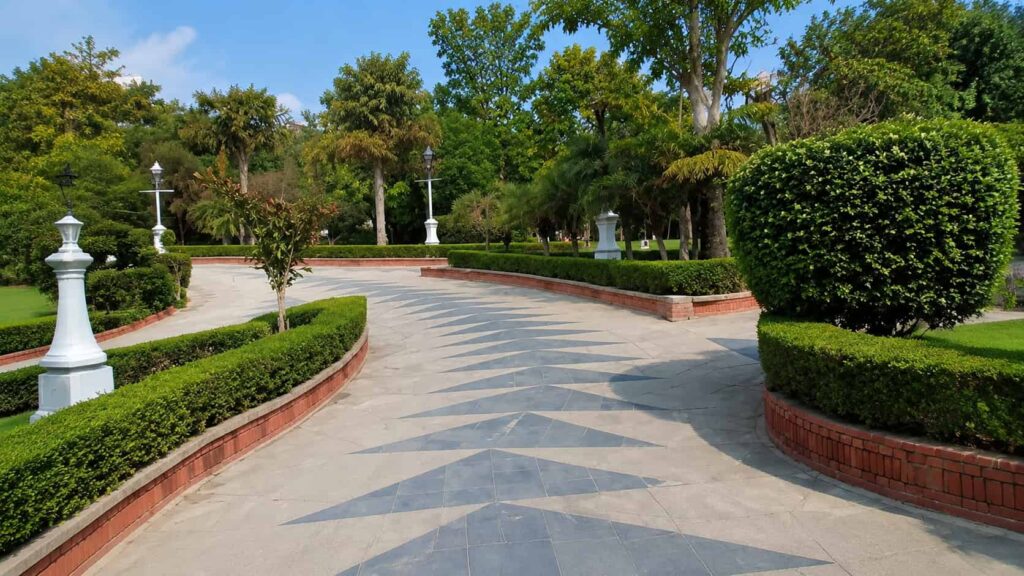
Neel Bagh — The Water Lily Pool
Neel Bagh centers around a large pool filled with water lilies (Neel = blue, Bagh = garden). Pergolas covered in climbing plants surround the pool, creating shaded walkways and framing the water from multiple angles. The design creates reflection — both literal (the sky and plants mirrored in the water) and psychological (it is the kind of space that makes people naturally slow down and sit). Benches positioned around the pool offer quiet spots for reading, journaling, or simply watching the light change on the water.
Trail of Fragrance and Rocky Ridge
The Trail of Fragrance is a dedicated sensory pathway where plant selection prioritizes scent over visual impact (though many of the plants are visually striking too). The path winds through the garden’s upper ridge, where natural rock formations create elevation changes and viewpoints. A stainless-steel sculpture (a pinwheel form that catches light and creates shadow patterns) sits at one vantage point, adding a contemporary art element to the natural landscape.
Courts of Specimen Plants
The garden organizes plants into themed courts — each focusing on a specific genus or use. The Bamboo Court features multiple bamboo species arranged to create a grove effect (the sound of wind through bamboo is distinctive). The Herb Garden groups culinary and medicinal plants with labels explaining traditional uses. Specialized courts showcase geraniums, calendula, rudraksha, and other plants chosen for sensory or cultural significance. These courts serve an educational function — you learn plant names, uses, and characteristics — while creating visually distinct zones within the garden.
Solar Energy Park — Educational Addition
The garden includes a small Solar Energy Park demonstrating renewable energy applications. This is less about sensory experience and more about public education, but it fits the garden’s broader mission of promoting sustainable, mindful living. For families visiting with children, it provides a learning component beyond just “nice flowers.”
Amphitheatre and Cultural Programming
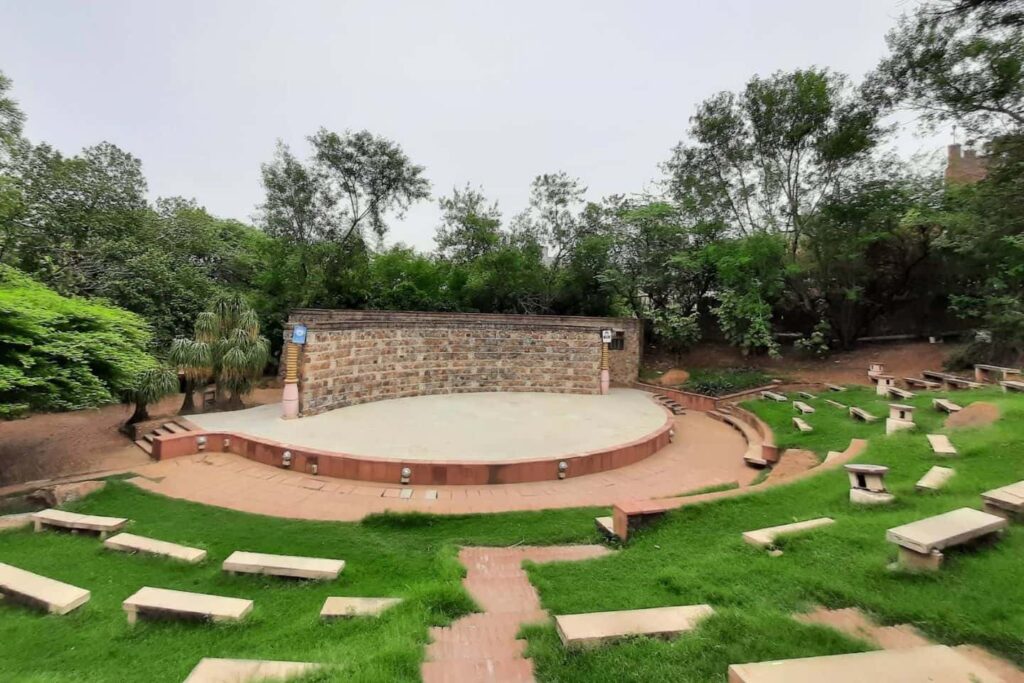
An open-air amphitheatre hosts cultural events, music performances, yoga sessions, and art exhibitions throughout the year. The garden’s annual flower festival (typically February–March) brings additional programming, food stalls, craft vendors, and significantly larger crowds. Regular yoga camps and nature walks are scheduled for morning hours, which residents of nearby areas (including Paryavaran Complex) use as free wellness resources.
The Sculpture Collection — Interactive Public Art
Over 25 contemporary art installations are scattered throughout the garden — stone elephants, abstract metal forms, water sculptures, interactive pieces that respond to touch or movement. Unlike galleries where you observe from a distance, these sculptures invite interaction. Children climb on them (when safe), adults photograph them, and the art becomes part of the landscape rather than separate from it. The collection represents Indian and international artists, creating a mini public sculpture park within the larger garden.
Trees, Shrubs & Herbs at the Garden of Five Senses, Said Ul Ajaib

The garden highlights over 200 plant varieties, including medicinal herbs, ornamentals, trees, shrubs, and exotics, emphasizing biodiversity, sensory stimulation, and educational value.
TREES
- Azadirachta indica (Neem): Iconic medicinal tree with fragrant leaves and bitter aroma that awakens the sense of smell while offering cooling shade for peaceful exploration.
- Bauhinia blakeana (Kachnar): Striking orchid-like purple blooms that delight the eyes with vibrant colors and attract butterflies for a lively sensory walk.
- Cassia fistula (Amaltas): Golden-yellow cascading flowers creating a spectacular visual display and gentle fragrance in the garden pathways.
- Delonix elata (Yellow Gulmohar): Bright yellow blooms and feathery foliage providing dramatic color contrasts and textured canopy for shade-seeking explorers.
- Erythrina indica (Indian Coral Tree): Vibrant red coral-like flowers that add bold visual pops and attract birds, enhancing the garden’s lively sound and sight experience.
SHRUBS
- Allamanda neriifolia: Bright yellow trumpet-shaped flowers offering cheerful visuals and a mild fragrance along winding exploratory trails.
- Barleria cristata: Delicate purple or white tubular blooms that invite close-up touch and visual discovery in shaded sensory corners.
- Calliandra hybrida: Fluffy powder-puff flowers in vibrant hues, creating soft textures and eye-catching accents for garden wanderers.
- Nerium oleander variegatum: Variegated leaves with pink or white fragrant clusters that stimulate sight and subtle scent in sunny spots.
- Daedalacanthus nervosus: Attractive foliage and flowers adding textural variety and color interest for tactile exploration.
GROUND COVERS
- Alternanthera bettzickiana: Colorful red-green foliage carpets that provide striking visual patterns and low-level texture underfoot.
- Alternanthera bettzickiana Variegated: Variegated leaves creating mosaic-like ground art that delights the eyes during leisurely strolls.
- Alternanthera dentata Ruby: Deep ruby-red leaves offering bold color contrast and soft ground cover for sensory contrast walks.
- Alternanthera versicolor: Multi-hued foliage that shifts colors beautifully, inviting closer inspection and photographic exploration.
- Zebrina pendula: Striped purple-green trailing leaves adding dynamic texture and visual stripes along garden edges.
THE CLIMBER AT THE GARDEN OF FIVE SENSES
- Aconocynema: Graceful climbing habit with delicate flowers that add vertical interest and layered sensory discovery on trellises.
- Jasminum pubescens: Fragrant white jasmine blooms that powerfully stimulate the sense of smell and create romantic, scented climbing displays.
- Syngonium podophyllum: Arrow-shaped leaves offering lush green textures and tropical feel for immersive foliage exploration.
Bougainvillea buttiana Lady Mary / Bougainvillea buttiana Mahara
- Vibrant bracted climbers bursting with colorful paper-like blooms that create spectacular visual walls and add cheerful energy to garden explorations.
BAMBOO TREES AT THE GARDEN OF FIVE SENSES
- Bambusa vulgaris: Tall, graceful culms that rustle soothingly in the breeze, providing auditory delight and serene green screening in the Bamboo Court.
- Buddha Belly Bamboo, Dwarf Green Bamboo, Fortune Bamboo, Giant Green Bamboo: Unique stem shapes and varying heights offering textural variety, wind sounds, and shaded peaceful nooks for visitors.
CACTI SUCCULENTS AT THE GARDEN OF FIVE SENSES
- Aloe speciosa, Euphorbia Green, Yucca aloifolia, Opuntia ficus-indica, Euphorbia caducifolia: Sculptural forms and unique textures that engage touch (with care) and sight in the striking Cacti Court.
PALM TREES IN THE GARDEN OF FIVE SENSES
- Areca Palm, Livistonia Palm, Washingtonia Palm, Bismarckia Palm: Elegant fronds swaying gently to create tropical ambiance, rustling sounds, and dappled shade for relaxed sensory exploration.
Practical Visitor Guide: How to Make the Most of Your Visit to Garden of Five Senses
Visiting the Garden of Five Senses once is refreshing — but experiencing it regularly can become one of the most enjoyable parts of your Delhi routine. Whether you’re a tourist, a South Delhi local, or planning a weekend getaway, here’s everything you need to know to plan a smooth, delightful visit.
How to Reach Garden of Five Senses
- By Metro (Most Convenient): Saket Metro Station (Yellow Line), Gate No. 2. The garden is just 1.5–2 km away. You can walk in 15–20 minutes or take a quick auto-rickshaw for ₹20–30.
- By Bus: Frequent DTC buses connect Saket, Mehrauli, and MB Road. Get down at Said-ul-Ajaib village stop.
- By Car / Cab: Located on Westend Marg, Saiyad-ul-Ajaib, New Delhi. Parking is available near the entrance (₹20–50). Easy to reach via Mehrauli–Badarpur Road.
- From Nearby Areas:
- Paryavaran Complex, Saket, or Pushp Vihar: 8–15 minutes by cab/auto.
- Qutub Minar / Mehrauli: Just 2 km away — perfect to combine both visits in one day.
Pro Tip: Evening visits are magical. Reach by 4:30–5 PM to enjoy golden hour light and stay until the garden closes.
Best Time to Visit the Garden of Five Senses
Timing significantly shapes your experience. Here is what actually matters when you visit the Garden of Five Senses:
Winter (November–February) — The Peak Season
This is objectively the best time to visit. Pleasant daytime temperatures (15°C–25°C) make walking comfortable at any hour. Flowers bloom across the garden — roses, dahlias, marigolds, petunias — creating the vivid color displays the garden is known for. The annual Garden Festival (typically February–March) brings additional programming, food stalls, craft vendors, and significantly larger crowds. Morning fog occasionally creates atmospheric photography conditions. The only downside: weekends get genuinely crowded, particularly during the festival period.
Best winter timing: Weekday evenings (4 PM–6 PM) or early weekend mornings (9 AM–11 AM) to avoid peak crowds while enjoying optimal weather.
Spring (March–April) — Transition Season
Temperatures start climbing (25°C–35°C), but mornings and evenings remain pleasant. Some winter flowers fade, but spring bloomers take over. The garden remains green and attractive, though the peak visual impact of winter diminishes. Crowds thin out post-festival. This is a good shoulder season — still beautiful, less busy, heat manageable if you time visits correctly.
Best spring timing: Mornings before 10 AM or evenings after 5 PM when temperatures drop. Avoid midday visits (11 AM–3 PM) as Delhi heat becomes uncomfortable.
Monsoon (July–September) — The Green Revival
The monsoon brings challenges (mud, slippery pathways, humidity, occasional closures during heavy rain) and advantages (lush greenery, rejuvenated water features, dramatically reduced crowds, the sensory experience of rain-washed air). If you visit during or immediately after rain, the garden feels different — the scent of wet earth, the sound of enhanced water flow, the saturated color of foliage. The garden is least crowded during monsoon, which appeals to people who value solitude over perfect weather.
Best monsoon timing: Afternoon visits after morning rain has stopped (2 PM–4 PM), when the garden is washed clean but pathways have dried enough for safe walking. Carry an umbrella and wear shoes with grip.
Summer (May–June) — The Challenging Season
Delhi summer heat (40°C+) makes daytime visits uncomfortable. The garden remains open but feels punishing between 11 AM and 5 PM. Flower displays diminish, greenery looks stressed, and the physical experience of walking in extreme heat overrides the sensory pleasures the garden intends. However, early mornings (6 AM yoga sessions if offered) or late evenings (after 6:30 PM as temperatures cool slightly) remain viable.
Best summer strategy: Visit only at dawn or dusk. Or skip summer entirely and focus on the garden during better seasons. For Paryavaran Complex residents with flexible schedules, a 6:30 AM summer visit can be beautiful — empty paths, softer light, tolerable heat before the sun climbs.
Daily Timing Recommendations
Golden hour for photography: Winter evenings (5:00 PM–6:30 PM) provide the best natural light. Summer sunrises (6:00 AM–7:30 AM) work well if you can wake early.
Quietest hours: Weekday afternoons (1:00 PM–3:00 PM) see minimal crowds but uncomfortable heat in hot months. Early weekday mornings (9:00 AM–10:30 AM) balance good weather with low visitor numbers.
Most crowded: Weekend afternoons (12:00 PM–4:00 PM), particularly during flower festival weeks.
Entry Fee, Timings & Visitor Information You Need to Know about the Garden of Five Senses
Here are the practical details that determine whether a spontaneous visit actually works:
Entry Fees (2026 Updated Rates)
- Adults: ₹50 per person
- Children (under 12 years): ₹20 per child
- Senior Citizens (60+ years): ₹20 per person
- Camera (professional/DSLR): ₹100 + GST
- Video Camera/Camcorder: ₹200 + GST
- Mobile phone cameras: Included in entry ticket (no additional charge)
Group bookings and special event rates may differ — check the official Delhi Tourism website or contact the garden directly for corporate events, wedding photography permissions, or large group visits.
Operating Hours
Daily: 9:00 AM – 7:00 PM (April–September)
Daily: 9:00 AM – 6:00 PM (October–March)
Closed: Mondays (weekly closure for maintenance)
Ticket counter closes: 30 minutes before garden closing time
During special events like the Garden Festival, operating hours may extend. Check current timings before planning evening visits to avoid arriving when the garden is closing.
Things You Cannot Do — Rules and Practical Considerations
- No plastic: Plastic bottles, bags, or packaging are not allowed. Carry reusable water bottles or paper bags.
- No outside food: Officially prohibited, though enforcement varies for small snacks if you are discreet and clean up after yourself.
- No pets: Animals are generally not allowed to maintain garden cleanliness and visitor safety.
- No smoking/alcohol: Strictly prohibited throughout the premises.
- No littering: Enforced seriously — carry your trash to designated bins.
- No damage to plants or installations: Touching sculptures is fine; climbing on fragile structures or picking flowers is not.
- Drones require special permission and are not casually allowed.
- The garden is wheelchair accessible on main pathways, though some rocky sections and stairs limit mobility.
What to Bring — Essential Items
- Comfortable walking shoes: Pathways are paved, but there are stairs and uneven rocky sections.
- Reusable water bottle: Plastic ban means you need to bring your own. Refill stations may be limited.
- Sun protection: Hat, sunglasses, sunscreen for daytime visits (limited shaded pathways in some sections).
- Government ID: May be checked at entry, especially for senior citizen/student discounts.
- Cash: Entry tickets and parking are cash-preferred (card machines may not always work).
- Light layers: Winter evenings can get cool; summer requires breathable clothing.
Common Mistakes to Avoid
- Visiting at noon in summer: The heat makes it miserable. Plan for early morning or late evening instead.
- Expecting extensive food options inside: The food court is limited. If you want a meal, plan to eat before or after your visit at nearby restaurants in Saket or Mehrauli.
- Wearing impractical footwear: Heels or formal shoes will make you uncomfortable. The garden involves walking, stairs, and sometimes uneven surfaces.
- Not checking the closure day: The garden is closed Mondays. Spontaneous Monday visits will disappoint.
- Bringing plastic bottles: They will be confiscated at entry. Plan ahead with reusable containers.
How Much Time Do You Actually Need?
A leisurely, complete visit — walking all major pathways, sitting for a while in multiple spots, taking photos, reading the plant labels — takes 2.5 to 3 hours. A quick evening walk hitting just the highlights (Khaas Bagh, Neel Bagh, Trail of Fragrance) can be done in 60–90 minutes. For regular visitors, you develop preferred routes and zones, which shortens visit duration. Many Paryavaran Complex residents treat it like a neighborhood park — 45-minute evening walks 2–3 times per week rather than long weekend visits.
Things to Do at Garden of Five Senses — Beyond Just Walking
The garden supports a surprising range of activities, which is part of why people keep returning. It is not a one-activity space.
Morning Walks and Slow Walking Practice
For people serious about fitness, the garden offers walking paths with enough variation (stairs, elevation changes, distance options) to make morning exercise interesting. But the garden is better suited for slow walking or walking meditation — where pace matters less than attention and sensory awareness. The designed environment supports this: you walk, you notice a sculpture, you stop, you continue. This kind of deliberate movement creates mental benefits beyond just cardiovascular exercise.
Photography — Landscapes, Portraits, and Conceptual Work
The garden attracts serious photographers and Instagram enthusiasts equally. The variety of backgrounds (Mughal architecture, contemporary sculpture, natural rocks, water features, seasonal flowers) means you can shoot multiple aesthetics in one location. Portrait photographers use the garden for pre-wedding shoots, family photos, and professional headshots. Landscape photographers come for seasonal changes and light studies. The garden charges an additional camera fee for professional equipment (₹100 + GST), but phone cameras are included in the entry ticket.
Reading and Journaling in Outdoor Spaces
Finding a quiet outdoor spot to read in Delhi is harder than it should be. Most parks are too noisy, cafes too crowded. The Garden of Five Senses has multiple benches and seating areas tucked into corners where you can genuinely sit for an hour with a book or journal without constant interruptions. The Neel Bagh benches near the water lily pool are particularly good for this — shaded, quiet, with visual interest (water, plants, sky) that does not demand constant attention.
Yoga and Meditation Practice
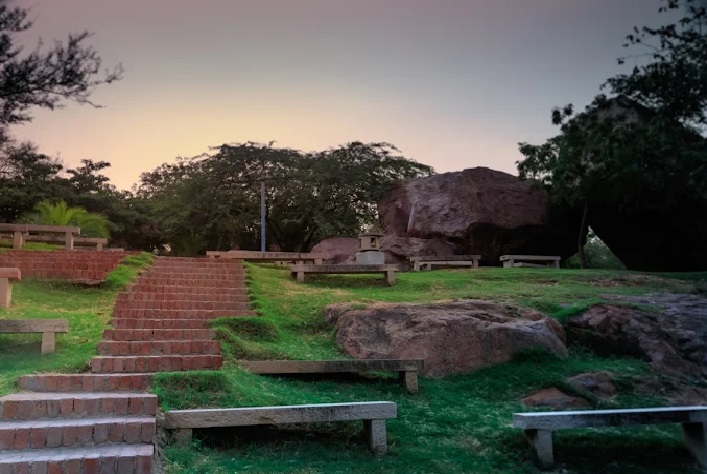
The garden hosts organized yoga sessions (check their schedule for timings and registration), but people also practice individually in quieter corners. The combination of natural setting, intentional design, and relative quiet creates conditions that support mindfulness practices better than home environments or crowded studios. For residents of Paryavaran Complex, the garden becomes a free outdoor yoga studio — bring your mat, find a spot, practice.
Couple Outings — Dates Without the Mall Environment
For couples living in shared flats or with families, finding private-enough outdoor spaces for conversation is a real need. The garden provides that — public enough to be safe and appropriate, but with enough spatial variety (quiet benches, secluded pathways, water features) to allow genuine conversation without feeling like you are on display. It is a date option that costs ₹100 total (₹50 per person), takes pressure off (“what expensive restaurant should we go to?”), and provides natural conversation starters (walking, reacting to art, discussing the plants).
Family Picnics and Children’s Exploration
Families use the garden for weekend outings — children run around the pathways (safely contained within the garden boundaries), interact with sculptures, watch fish in the water features, and generally burn energy in a green space that is not their cramped flat. While outside food is technically not allowed, families bring small snacks and find spots to sit for informal picnics. The key is discretion and cleanup — if you are not leaving trash or creating obvious food displays, enforcement is lenient.
Solo Relaxation and Digital Detox
For people who live in crowded conditions (PG accommodations, shared flats, joint families), the garden offers rare solitude. You can be alone without being in your room staring at a screen. The garden’s design — with its emphasis on sensory engagement — naturally encourages putting the phone away and actually experiencing the space. It is a built-in digital detox that does not require willpower — the environment pulls your attention to the physical world.
Art Exploration and Cultural Events
The garden’s regular programming includes art exhibitions, craft fairs, music performances, and cultural events. Checking the schedule before visiting can turn a simple walk into a richer cultural experience. The annual Garden Festival (February–March) brings food vendors, artisan stalls, plant sales, and live performances, creating a temporary village-fair atmosphere. For working professionals in Paryavaran Complex, these events provide low-cost weekend entertainment without the mall-and-movie default.
Why People Keep Coming Back to the Garden of Five Senses?
Tourist attractions get visited once. Places that genuinely improve daily life get visited repeatedly. The Garden of Five Senses falls into the second category for people living nearby. Understanding why people return helps explain its value as a lifestyle amenity rather than just a weekend destination.
It provides an emotional reset in a Manageable Time Frame
After a stressful day — work deadlines, difficult conversations, traffic frustrations, the accumulated friction of city living — you need a reset mechanism. Some people exercise, some meditate, some watch shows. The garden offers a physical version: you go, you walk, you notice beauty and calm, you return feeling slightly more human. The key is that this reset happens in 60–90 minutes, which fits into an evening routine. It is not a full-day commitment like a weekend trip outside Delhi. It is an after-work intervention that actually works.
The Space Feels Non-Commercial and Authentic
Delhi’s social spaces increasingly feel commodified — you meet friends at cafes where you must keep ordering, malls where the implicit expectation is shopping, restaurants where the bill determines how long you can stay. The garden charges a minimal entry fee (₹50) and then leaves you alone. You can sit for two hours without anyone asking if you want anything else. That non-commercial quality — where the space exists for its own sake rather than to extract spending — creates a psychological ease that people notice and appreciate.
It Accommodates Different Moods and Needs
Some days you want energetic activity; other days you want passive observation. The garden handles both. You can walk briskly for exercise, or you can sit on a bench and watch other people. You can engage deeply (reading plant labels, studying sculptures, practicing photography) or you can zone out (just walking, letting your mind wander, processing nothing in particular). This flexibility means the garden remains useful across different emotional states and life phases — it works when you are happy, when you are stressed, when you are bored, when you need to think, when you want to stop thinking.
Seasonal Changes Create Newness Without Travel
The garden looks genuinely different across seasons. Winter brings the flower festival and peak blooms. Monsoon transforms the greenery and fills the water features. Summer changes the light and shadow patterns. Spring brings different flowering cycles. Even autumn (Delhi’s mildest season) has its own palette. This seasonal variation means the garden never feels completely static — you see something new or different even if you visit monthly. That quality of change-within-familiarity keeps it interesting for regular visitors.
It Creates Unscripted Social Encounters
Unlike curated social media or planned meetups, the garden creates accidental encounters. You run into neighbors from Paryavaran Complex. You chat with a stranger who asks about your camera. You overhear interesting conversations. You watch families interact, couples negotiate, children play. This unscripted social texture — seeing how other people exist in public space — adds richness to the experience that private or purely digital social life lacks. It reminds you that you are part of a larger human ecosystem.
Food, Cafes & Nearby Experiences to Combine With Your Garden Visit
The garden itself has limited food options, which means most visitors combine their visit with dining before or after. Fortunately, the location puts you within easy reach of multiple food corridors.
Cafes and Restaurants Near the Garden
Saket commercial district (2.5–3 km): Select City Walk mall has 30+ restaurants and cafes ranging from Starbucks and Chaayos to sit-down restaurants like Mainland China and Berco’s. This is the default post-garden dining destination for most visitors. If you are coming from Paryavaran Complex, you can structure your outing as: garden visit (2 hours) → cafe in Saket (1 hour) → return home, making it a 3–4 hour evening without excessive driving.
Mehrauli heritage dining (4–5 km): Mehrauli village and the area near Qutub Minar have heritage-themed cafes and restaurants (Olive Bar & Kitchen, Rose Cafe) that combine food with atmospheric settings. These are more expensive (₹800–₹1,500 per person) but offer unique ambience — garden seating, heritage architecture, quieter than mall environments. Good for special occasions or date nights.
Local dhabas in Said-ul-Ajaib (1–2 km): For budget-conscious visitors, the village roads around Said-ul-Ajaib have small dhabas and local eateries serving North Indian meals at ₹150–₹300 per person. Nothing fancy, but functional if you want a quick meal after your visit without driving to Saket.
For a complete guide to the cafe and restaurant ecosystem around this area, see our detailed post on Best Cafes and Food Places Near Paryavaran Complex.
Typical Visit Patterns That Work
- Weekday evening (working professionals): Leave work at 4:30 PM → Garden visit 5:00 PM–6:30 PM → Quick dinner at Saket (7:00 PM–8:00 PM) → Home by 8:30 PM.
- Weekend afternoon (families/couples): Lunch at Saket or home (12:00 PM–1:00 PM) → Garden visit 2:00 PM–4:30 PM → Cafe for coffee/snacks (5:00 PM–6:00 PM) → Evening free.
- Morning routine (fitness-focused): Garden visit 9:00 AM–10:30 AM → Breakfast at Chaayos or CCD → Start rest of day refreshed.
How the Garden of Five Senses Improves Lifestyle Around Paryavaran Complex?
This is where the garden shifts from being a nice place to visit into a genuine lifestyle advantage that influences rental decisions. When people evaluate flats or apartments for rent in Paryavaran Complex, the initial focus is practical: rent amount, commute to work, power backup, water supply. But over time, residents discover that quality of life between work and home matters just as much. Proximity to a space like the Garden of Five Senses is part of that quality-of-life calculation.
Green Spaces Measurably Improve Mental Health and Daily Living
This is not speculative — research on urban green spaces consistently shows that proximity reduces stress, lowers cortisol levels, improves sleep quality, and increases overall life satisfaction. For renters working in high-stress jobs (IT, finance, consulting, healthcare), having a garden 10 minutes away provides a pressure-relief mechanism that genuinely matters. You use it after bad days. You use it when your flat feels claustrophobic. You use it when you need to think through a problem away from screens and walls.
For people working remotely or in hybrid models, the garden becomes even more valuable. When your home is also your office, separating work mode from personal mode requires physical transitions. Walking to the garden, spending an hour there, and returning home creates that boundary. It is the equivalent of the old commute — a buffer between professional and personal selves — except better because it involves nature instead of traffic.
Why Renters Now Prioritize “Livability” Over Just Price
Rental search patterns have shifted. Ten years ago, the conversation was dominated by: “What’s the rent? How far is it from my office?” Today, particularly among young professionals and families, the questions expand: “What is there to do nearby? Are there green spaces? Can I walk anywhere pleasant? Does the neighborhood feel alive or dead?” This is what planners call “livability” — the infrastructure of daily life beyond the four walls of your flat.
Paryavaran Complex benefits from this shift. The rental rates here are genuinely affordable compared to central South Delhi (Hauz Khas, Greater Kailash, Safdarjung Enclave), yet the livability infrastructure is strong: metro access via Chhatarpur, quality hospitals nearby, decent schools, the Saket commercial belt within reach, and — critically — the Garden of Five Senses as a free-after-entry lifestyle amenity. That combination is hard to find at this price point elsewhere in the city.
For residents of Block A, Block B, or Block C of Paryavaran Complex, the garden is close enough (2.5–3 km) to visit on a whim. It is not a full-day destination that requires planning. It is a 15-minute auto-rickshaw ride or a 20-minute cycle. That proximity transforms it from a tourist attraction into a lifestyle resource — the place you go when you need a mental reset, when you want to meet a friend without sitting in a cafe spending ₹500 on coffee, when your parents visit and you want to show them something genuinely beautiful without driving across the city.
Who Should Visit the Garden of Five Senses?
The Garden of Five Senses appeals to almost everyone because it offers something different for different moods and people. Here’s how various visitors enjoy this beautiful space:
Working Professionals:
After a long, stressful day in Gurgaon, Noida or South Delhi offices, many professionals come here to unwind. Just 15–20 minutes from nearby areas, you can take a peaceful walk, listen to the soothing chimes, and return home feeling much lighter. It works as an affordable “evening reset” without the cost of cafes or gyms.
Couples:
This garden has become a favourite date spot for young couples. For just ₹100 (₹50 each), you get a beautiful, safe and romantic setting to walk, talk, and spend quality time. No pressure of repeatedly ordering in cafes. The soft lighting, fragrant flowers, and artistic corners make it perfect for evening dates.
Families with Kids:
Parents love bringing their children here on weekends. Kids enjoy running on the grass, exploring the colourful sculptures, and watching the water fountains. The garden feels safe and enclosed. Many families turn their visit into a fun learning experience — children enjoy identifying plants, flowers, and the unique art installations.
Students & Youngsters:
Students from nearby colleges and coaching centres visit regularly because it is budget-friendly (just ₹50 entry). Some come to read books on the benches, others meet friends, and many simply come to take a break from mobile screens and enjoy nature. The peaceful atmosphere helps them relax and refresh their minds.
Senior Citizens & Solo Visitors:
Many seniors come for morning or evening walks in a clean, green environment. Solo visitors also feel comfortable here — whether they want to click photos, sit quietly with a book, or simply enjoy some “me time” away from the city noise.
Photographers & Nature Lovers:
The garden is a paradise for photography enthusiasts. The colourful flowers, artistic sculptures, water reflections in Neel Bagh, and golden evening light create beautiful frames throughout the day.
Nearby Places Worth Exploring Along With Garden of Five Senses
The Garden of Five Senses is perfectly located in a vibrant South Delhi hub. Its proximity to heritage sites, nature spots, and trendy hangouts makes it easy to create memorable full-day or half-day itineraries. Whether you’re visiting for a few hours or spending the whole day, here are the best places to combine with your Garden of Five Senses visit.
Champa Gali – The Parisian Alley of Delhi
Tucked in Lane 3 of Westend-Marg, Said-ul-Ajaib (very close to the Garden of Five Senses), Champa Gali is a hidden gem that feels like a European street with fairy lights, street art, cozy cafes, and creative shops. Perfect for post-garden exploration — grab coffee, shop for quirky items, or enjoy organic bites at places like Jugmug Thela. Its artistic vibe beautifully complements the sensory experience of the garden. Many visitors combine both for a relaxed evening outing.
Butterfly Park (Near Saket Metro Station Gate no. 2 )
A short distance from the Garden of Five Senses and Saket Metro, the Butterfly Park offers a delightful nature experience focused on colourful butterflies and greenery. It’s a peaceful spot ideal for families, photography enthusiasts, and nature lovers. Pair it with the Garden of Five Senses for a complete nature-themed day — one for designed sensory gardens and the other for observing fluttering biodiversity.
Qutub Minar — UNESCO World Heritage Site
The Qutub Minar complex is approximately 2 kilometers from the Garden of Five Senses. This 12th-century minaret and the surrounding archaeological ruins represent Delhi’s medieval Islamic architecture. If you have visiting family or friends who want to see Delhi’s heritage, combining Qutub Minar (morning visit, 9 AM–11 AM) with the Garden of Five Senses (afternoon, 2 PM–4 PM) creates a full-day itinerary without excessive driving between sites.
Mehrauli Archaeological Park and Village
Mehrauli village (4–5 km) blends heritage ruins, boutique shopping, and contemporary cafes. The Mehrauli Archaeological Park preserves over 100 historical monuments spanning different Delhi dynasties. After visiting the Garden of Five Senses, you can explore Mehrauli’s narrow lanes, shop for antiques or handicrafts, and have dinner at one of the heritage restaurants. This combination (nature + history + food) creates a more textured South Delhi experience than just hitting malls.
Saket Malls and Commercial District
Select City Walk and DLF Place Saket provide the urban commercial contrast to the garden’s natural calm. After time in the garden, some visitors want air-conditioned comfort, shopping options, and restaurant variety. The two environments complement each other — nature to reset, commerce to reengage. For residents of Paryavaran Complex, this combination (garden → Saket) happens frequently as an evening or weekend routine.
Sanjay Van — Urban Forest Reserve
For serious nature enthusiasts, Sanjay Van (approximately 6 km from the Garden of Five Senses) is a 780-acre urban forest reserve with hiking trails, bird-watching opportunities, and wilder terrain than the manicured Garden of Five Senses. The two serve different needs: the Garden of Five Senses for designed sensory experience and social activity; Sanjay Van for solitary nature immersion and physical exertion. Both are accessible from Paryavaran Complex, giving residents options based on mood and purpose.
Pro Tip for Visitors: Start at Qutub Minar or Butterfly Park in the morning, spend relaxed time at the Garden of Five Senses in the afternoon/evening, and end at Champa Gali or Saket for food and vibes. This combination works beautifully for tourists, families, couples, and locals alike.
Is Living Near the Garden of Five Senses Worth It? The Honest Review
Proximity to the Garden of Five Senses is not a primary rental decision factor — no one chooses Paryavaran Complex solely because of the garden. But it functions as a meaningful secondary advantage that improves daily living quality in ways that compound over time.
The Real Advantages
- Mental health infrastructure: Having access to green space you can visit spontaneously reduces accumulated stress. Over months and years, this creates measurable quality-of-life improvements.
- Social and recreational flexibility: The garden provides a non-commercial social space where you can meet friends, go on dates, take family outings, or spend solo time without spending significantly. This flexibility matters more as you live in an area longer.
- Lifestyle richness: The garden adds textural variety to urban living. Your week is not just flat-to-office-to-flat-to-mall. It includes outdoor time, seasonal beauty, sensory engagement — elements that make city life more bearable long-term.
- Property value signal: Areas near quality parks and green spaces tend to hold rental value better during market fluctuations. This matters more for landlords than tenants, but tenants benefit from neighborhood stability and long-term livability.
Realistic Considerations
- Weekend crowds: The garden gets busy on weekend afternoons, particularly during flower festival season. If you visit at peak times, the calm you are seeking diminishes. Solution: visit weekday evenings or early weekend mornings.
- Seasonal variability: The garden is genuinely uncomfortable to visit during peak summer (May–June). You essentially lose this amenity for two months unless you visit at dawn or dusk. Winter and spring compensate with excellent conditions, but the garden is not a year-round equal experience.
- Not walkable from all blocks: While the garden is close (2.5–3 km), it is not walking distance for most people. You need an auto, bike, or vehicle. This adds a small friction layer compared to parks that are literally next door. However, the 10–15 minute travel time is still short enough for spontaneous visits.
- Limited practical amenities inside: The garden does not have extensive food options, restrooms are basic, and there is no WiFi. It is a nature space, not a co-working cafe disguised as a garden. If you need those amenities, you pair the garden visit with stops at Saket.
Final Thoughts:
The Garden of Five Senses does not make Paryavaran Complex the best rental locality in Delhi. What it does is multiply the value of what you are already getting — affordable rent, decent connectivity, residential calm — by adding a dimension of beauty, peace, and sensory richness that most comparable neighborhoods lack. You are not just renting a flat; you are accessing a lifestyle infrastructure that includes this remarkable public space.
The garden works because it solves real problems: the need for green space in a concrete city, the desire for social options that do not require constant spending, the requirement for mental reset mechanisms in high-stress urban lives. For people choosing to live in Paryavaran Complex, knowing that a world-class sensory garden is 10 minutes away changes the daily equation. It means better weekends, more pleasant evenings, healthier stress management, and simply more enjoyable existence between work obligations.
This is not abstract or aspirational. This is what actually happens: you visit once out of curiosity, return because it felt good, eventually integrate it into your weekly routine, and over time realize it has become one of the reasons you stay in the area rather than moving elsewhere. That slow accumulation of small quality-of-life improvements — the kind that do not show up in rental listings but shape how you feel about where you live — is what makes proximity to the Garden of Five Senses a genuine lifestyle advantage rather than just a tourist attraction near your home.
Frequently Asked Questions
Why is the Garden of Five Senses so famous?
The Garden of Five Senses is famous for being a uniquely designed public space in Delhi that engages all five human senses — sight, sound, smell, touch, and taste — through intentional landscape architecture, contemporary art installations, fragrant plant trails, water features, and interactive sculptures. Opened in 2003 and designed by Pradeep Sachdeva, the garden spans 20 acres and features Mughal-inspired gardens (Khaas Bagh), sensory trails, over 200 plant varieties, 25+ art sculptures, and an installation of 500 ceramic chimes that create harmonious sounds. Unlike conventional parks focused only on visual beauty, this garden creates a multi-sensory experience that promotes mindfulness, relaxation, and emotional well-being, making it a distinctive leisure destination in South Delhi.
Is the Garden of Five Senses good for couples?
Yes, the Garden of Five Senses is excellent for couples, offering a peaceful, romantic environment without the commercial pressure of malls or expensive restaurants. The garden provides quiet benches near water features (Neel Bagh water lily pool), secluded pathways through fragrance trails, beautiful photo opportunities in the Mughal-style Khaas Bagh, and spaces for genuine conversation in a naturally beautiful setting. Entry costs only ₹50 per person (₹100 total for a couple), making it an affordable date option. Evening visits during golden hour (5:30 PM–6:30 PM in winter) are particularly popular with couples for the soft lighting and romantic atmosphere. The garden is safe, well-maintained, and offers enough privacy within a public space to allow comfortable interactions, making it ideal for couples seeking budget-friendly outdoor dating alternatives to crowded cafes or malls.
What is the entry fee for the Garden of Five Senses?
As of 2026, the entry fee for the Garden of Five Senses is: Adults ₹50 per person, Children (under 12 years) ₹20 per child, Senior Citizens (60+ years) ₹20 per person. If you bring professional camera equipment (DSLR or similar), there is an additional camera fee of ₹100 + GST. Video cameras or camcorders require ₹200 + GST. However, mobile phone cameras are included in the standard entry ticket with no extra charge. The garden operates from 9:00 AM to 7:00 PM (April–September) and 9:00 AM to 6:00 PM (October–March), and is closed every Monday for maintenance. Payment is typically cash-preferred, though some card facilities may be available. These modest entry fees make the garden one of the most affordable quality leisure spaces in South Delhi.
Which metro station is closest to the Garden of Five Senses?
The closest metro station to the Garden of Five Senses is Saket Metro Station on the Yellow Line (Line 2), specifically Gate No. 2 exit. The garden is approximately 1.5 kilometers from Saket metro station, which translates to a 15–20 minute walk or a quick 5-minute auto-rickshaw ride (₹20–₹30 fare). The Saket metro station is well-connected on the Yellow Line, which runs from Samaypur Badli in North Delhi to HUDA City Centre in Gurugram, with direct connections to central Delhi stations like Rajiv Chowk (Connaught Place), Central Secretariat, and INA. For residents of Paryavaran Complex, the route is: auto to Chhatarpur metro station (1.5 km from Paryavaran Complex), then one metro stop to Saket, then another short auto ride or walk to the garden entrance.
Is the Garden of Five Senses near Paryavaran Complex?
Yes, the Garden of Five Senses is quite close to Paryavaran Complex — approximately 2.5–3 kilometers, depending on which block you live in. By auto-rickshaw, the journey takes 10–15 minutes and costs ₹50–₹80. By personal vehicle or bike, it’s an 8–12 minute ride via local roads through Said-ul-Ajaib. The proximity makes the garden accessible for spontaneous evening visits after work, weekend morning walks, or casual outings without requiring extensive planning or travel time. This short distance transforms the garden from a tourist destination into a genuine lifestyle amenity for Paryavaran Complex residents — you can decide at 5 PM to visit and actually be there by 5:15 PM, which is rare for quality leisure spaces in Delhi. The garden’s location makes it one of the significant lifestyle advantages of living in Paryavaran Complex compared to other South Delhi rental areas.
What is the best time to visit the Garden of Five Senses?
The best time to visit the Garden of Five Senses is during winter months (November–February) when Delhi weather is most pleasant (15°C–25°C), flowers are in peak bloom, and the annual Garden Festival (February–March) adds cultural programming and food stalls. Within the day, weekday evenings (4:00 PM–6:30 PM) offer optimal conditions — comfortable temperatures, beautiful golden-hour lighting for photography, and smaller crowds compared to weekends. For those who prefer solitude, weekday mornings (9:00 AM–10:30 AM) provide quiet pathways and fresh morning air. Avoid visiting during peak summer months (May–June) between 11 AM and 5 PM due to extreme Delhi heat (40°C+). Monsoon season (July–September) brings lush greenery but also mud, slippery pathways, and occasional closures during heavy rain. The garden is closed every Monday for maintenance, so plan visits accordingly.
Can families and children visit the Garden of Five Senses safely?
Yes, the Garden of Five Senses is very safe and suitable for families with children. The garden is enclosed with staffed entry gates, has no vehicle traffic inside, features paved pathways suitable for strollers, and offers interactive elements (sculptures, water features, art installations) that engage children’s curiosity. Children enjoy exploring the different zones, touching approved sculptures, watching fish in water features, and having open space to run around safely. The garden charges reduced entry for children under 12 (₹20 versus ₹50 for adults), making it affordable for family outings. Weekend afternoons see many families using the garden for picnics and outdoor play. Parents should note that the garden has basic restroom facilities, limited food options inside (plan snacks accordingly), and some rocky terrain and stairs that require supervision for very young children. Overall, it’s one of the better family-friendly outdoor spaces in South Delhi.
How much time is needed to explore the Garden of Five Senses?
A leisurely, comprehensive visit covering all major zones — Khaas Bagh, Neel Bagh, Trail of Fragrance, sculpture installations, specimen plant courts, and time to sit and absorb the atmosphere — typically takes 2.5 to 3 hours. If you are a photographer, allowing 3–4 hours gives you time to capture different areas in various lighting conditions. For a focused evening walk hitting just the highlights (Khaas Bagh and Neel Bagh), 60–90 minutes is sufficient. Regular visitors from nearby areas like Paryavaran Complex often spend 45–60 minutes for quick after-work decompression walks, treating the garden more like a neighborhood park than a full-day destination. The garden’s 20-acre size means you can customize visit duration based on your purpose — whether it’s serious photography exploration, meditative walking, family picnicking, or casual evening strolls.
Are there cafes and restaurants near the Garden of Five Senses?
Yes, several cafe and restaurant options exist near the Garden of Five Senses. The Saket commercial district (2.5–3 km away) offers the most variety — Select City Walk mall has Starbucks, Chaayos, multiple restaurants (Mainland China, Bikanervala, Berco’s, Punjabi By Nature), and food courts. Mehrauli heritage area (4–5 km) features atmosphere-focused restaurants like Olive Bar & Kitchen and Rose Cafe with garden seating and heritage ambience, though these are more expensive (₹800–₹1,500 per person). Local dhabas in Said-ul-Ajaib village (1–2 km) provide budget North Indian meals (₹150–₹300 per person). Most visitors combine their garden visit with dining before or after — common pattern is garden walk 5:00 PM–6:30 PM followed by dinner/coffee in Saket 7:00 PM–8:00 PM. The garden itself has limited food options (small food court with organic snacks), so planning meals outside is recommended for complete dining experiences.
Why do renters prefer living near green spaces like the Garden of Five Senses?
Renters increasingly prioritize proximity to green spaces because urban research consistently shows that access to parks and gardens measurably improves mental health, reduces stress, improves sleep quality, and increases overall life satisfaction. For working professionals in high-stress jobs, having a garden 10–15 minutes away provides a practical stress management resource — you use it after difficult workdays, for weekend mental resets, or when your flat feels claustrophobic. Remote and hybrid workers particularly value nearby green spaces because they need physical separation between work and personal life when home doubles as office. Green spaces also provide affordable social and recreational options — meeting friends without cafe expenses, date locations without financial pressure, family outings with children, photography opportunities, and exercise environments more pleasant than gyms. Areas near quality parks tend to have better long-term livability, which reduces tenant turnover and creates more stable neighborhoods. For renters evaluating Paryavaran Complex, proximity to the Garden of Five Senses represents a lifestyle multiplier that enhances daily living quality beyond what the rental price alone would suggest.
Comments